
Oil crack spreads measure the profit margin between crude oil futures and refined product prices.
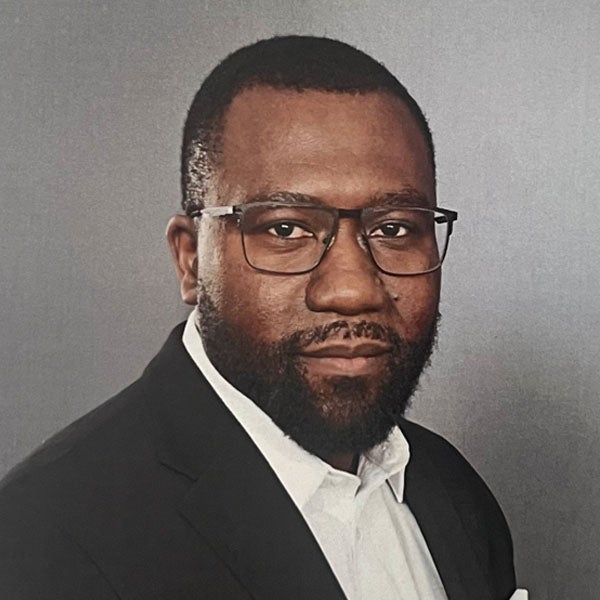
To understand market dynamics and speculate on trading margins, Rice University statistics doctoral student Arnold Muchatibaya is developing time-series models for oil crack spreads that account for higher probability of extreme values and volatility.
The research is funded by a gift from alumnus Michael Reed (B.S. '87) under the Center for Computational Finance and Economic Systems (CoFES). Frederi Viens, a professor of statistics and an affiliated faculty member of CoFES, is Muchatibaya’s advisor.
“Oil crack spreads serve as a key indicator of refinery profitability and market conditions,” said Muchatibaya. “For example, crack spreads vary by refined petroleum products – gasoline and distillates such as diesel, heating oil, and jet fuel, with prices rising or falling depending on market drivers such as the winter heating season or summer traveling season.”
Muchatibaya’s model uses autoregressive processes with Student-t-distributed innovations – a robust approach used to handle data with higher dispersion and probability distributions.
Measuring oil crack spreads is complex and heavily influenced by volatile market forces. Muchatibaya tailors his models to capture extreme price movements commonly observed in refined product markets and achieves better predictive performance than Gaussian-based models.
“Drivers of high market volatility and extreme price movements include geopolitical instability and extreme weather,” said Muchatibaya. “Ultimately, the model will then be used to forecast refinery margins and as inputs to arbitrage-free pricing of options written on crack spreads.”
Muchatibaya's research with Viens presents complex concepts in statistical and mathematical probability. Ongoing and future work extends these models to accommodate time-varying dynamics through regime switching and state-space formulations. In particular, Markov switching autoregressive models are used to allow persistence, volatility, and tail behavior to vary across latent market regimes associated with seasonality and macroeconomic shocks.
Additional directions include stochastic volatility extensions, Bayesian hierarchical estimation, and simulation-based methods such as Monte Carlo and particle filtering to quantify parameter and predictive uncertainty in complex, nonlinear models.
Muchatibaya, who is interested in a career in quantitative finance, already has his Financial Risk Manager (FRM) certification, a master’s degree in statistics from Michigan State University, and a master’s in computational engineering from Finland’s LUT University.
He was a co-instructor of CoFES courses in STAT 449/649 Quantitative Financial Risk Management for two fall semesters from 2024-2025, alongside Katherine Ensor, the Noah G. Harding Professor of Statistics, and Wentao Zhao, a senior director at PJM Interconnection. Muchatibaya has also served as a teaching assistant for Market Models STAT 486/686, Quantitative Financial Analytics STAT 482/682, and for Blockchain & Cryptocurrency 487/687 under CoFES lecturer Michael Jackson, who is also the director of the Professional Master of Statistics (MSTAT) Program.
Quantitative Finance STAT 499/699 is a unique one-credit course offered for repeatable credit every semester. Its curriculum and guest lectures from industry experts are designed to connect techniques in mathematics and modern statistical analysis with learning to trade futures and options through trading simulation platforms.
Michael Reed is an independent investment consultant. He has extensive experience in quantitative finance, asset management and trading. For over eight years, he was the senior quantitative researcher and a portfolio manager at Zebra Capital Management, a boutique quantitative investment firm that specializes in translating academic research in behavioral finance into investor returns. He was a managing director at Morgan Stanley’s Process Driven Trading Division from 1994 – 2009.
Reed serves on the CoFES External Advisory Board, is a board member and chief investment officer for the New Canaan Community Foundation, and a board member and treasurer for the Jericho Project. He has a Ph.D. in electrical engineering from Princeton University and a B.S. in electrical engineering from Rice University.
- Shawn Hutchins, Communications and Marketing Specialist